« Articles
Porsche 718 Boxster 2026: Sporty and Powerful Roadster


Key Takeaways
- The 2026 Boxster still offers three engine choices: a 300-hp 2.0-liter turbo-four, a 350-hp 2.5-liter turbo-four in the S, and a 394-hp naturally aspirated 4.0-liter flat-six in the GTS 4.0
- US pricing starts at $74,900 for the base 718 Boxster, with the GTS 4.0 starting from $105,500
- Apple CarPlay is now standard across the entire 2026 lineup, not just higher trims
- The soft top still drops in seconds flat, keeping the classic roadster experience intact
- Buyers can pick between a six-speed manual or a seven-speed PDK automatic on every trim
What Makes the 2026 Boxster Worth a Second Look
The Porsche 718 Boxster has always been the roadster people cross-shop against six-figure exotics, and the 2026 model year doesn't change that formula. It's still a mid-engine, rear-drive convertible built around driver feel first and spec-sheet bragging second. What has changed is the lineup structure, with Porsche sharpening the trim walk and folding in tech that used to be optional.
How Has the Lineup Changed for 2026
The 718 Boxster T model leans minimalist, with black exterior trim and 20-inch Carrera S wheels for a driver-focused look. The S trim steps up with a larger turbocharged four-cylinder, 19-inch wheels, and dual exhaust outlets. Every trim in the range now gets Apple CarPlay as standard, so buyers no longer have to pay extra just to mirror their phone.
Quick look at the 2026 trim walk:
Trim | Engine | Power | Notable Feature |
718 Boxster | 2.0L turbo flat-four | 300 hp | Entry point to the lineup |
718 Boxster S | 2.5L turbo flat-four | 350 hp | 19-inch wheels, dual exhaust |
718 Boxster T | 2.0L turbo flat-four | 300 hp | Minimalist, driver-focused trim |
718 Boxster GTS 4.0 | 4.0L naturally aspirated flat-six | 394 hp | Six-cylinder exhaust note |
Which Engine Should You Actually Choose
This is where the Boxster earns its reputation. The base engine is plenty for daily driving, but the GTS 4.0's naturally aspirated flat-six is the one enthusiasts keep coming back to.
- 300-hp 2.0L turbo-four: smooth, efficient, quick enough for most drivers
- 350-hp 2.5L turbo-four (S): sharper throttle response, faster in a straight line
- 394-hp 4.0L flat-six (GTS 4.0): a naturally aspirated engine with a head-turning growl, best suited to drivers who care as much about sound as speed
Every version pairs with a six-speed manual as standard, with a seven-speed automatic available as an option. Adaptive dampers and a torque-vectoring rear differential are also on the options list for anyone chasing sharper cornering.
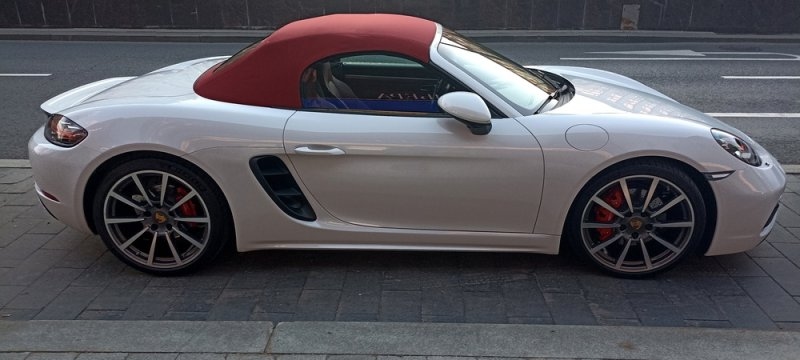
Manual or PDK, Which Fits Your Driving Style
If you enjoy being fully involved in the drive, the six-speed manual is still the purist's choice. If you want the quickest shifts possible, whether on a canyon road or at the track, the PDK automatic remains the faster option in a straight line. Neither choice is wrong; it just depends on what kind of drive you're after.
Don't Miss: Porsche 718 Boxster vs BMW Z4 Real World Test Drive Review
How Does It Handle on the Road
The mid-engine layout hasn't changed, and that's the point. Weight sits low and centered between the axles, which keeps the car balanced through corners rather than pushing or darting. Optional adaptive suspension lets drivers soften things up for daily commutes or stiffen everything for a spirited backroad run. Add the available torque-vectoring system, and the Boxster stays composed even when you're pushing it into a tight turn.
What's New Inside the Cabin
Porsche's cabin philosophy stays driver-first for 2026. Controls are grouped within easy reach, the seats are supportive without feeling stiff, and the layout avoids clutter. Apple CarPlay integration is now standard across every model, which is a real convenience upgrade over previous years when it was tied to higher trims.
- Leather and Alcantara upholstery options for a more premium feel
- Dual-zone climate control with heated and available ventilated seats
- Optional Bose or Burmester sound systems for a proper audio upgrade
Is the 718 Boxster Safe Enough for Daily Use
Yes, and it's better equipped than it looks at first glance. Standard safety kit includes front and side airbags, stability control, and traction control, plus a rearview camera on every trim. Buyers who want more can add adaptive cruise control, lane-keeping assist, and parking sensors, useful additions for anyone planning to use the Boxster as a daily driver rather than a weekend-only car.
How Practical Is It for Everyday Driving
A sports car this focused was never going to be a hauler, but it's more livable than people expect.
Category | Detail |
Cargo space | Roughly 9.7 cubic feet combined (front and rear trunks) |
Roof operation | Opens or closes in about nine seconds, usable at speeds up to 31 mph |
Fuel economy | Turbo-four models return solid mpg for the segment, better than most rivals with this much power |
What Does the 2026 Boxster Cost
US pricing starts at $74,900 for the base 718 Boxster, with the Style Edition from $81,300, the GTS 4.0 from $105,500, and the range-topping Spyder RS starting around $170,100. Where you land on that range depends heavily on engine choice and how many options get added at the configurator stage.
Final Verdict
The 2026 Porsche 718 Boxster doesn't reinvent itself, and it doesn't need to. It sharpens the trim lineup, makes CarPlay standard across the board, and keeps the driving experience that made the Boxster a benchmark in the first place. Whether you want a practical daily convertible or a weekend canyon carver, there's a trim here built for that job.
Also Read: Porsche 718 Cayman vs BMW M4: A Detailed Comparison Guide
FAQs
Is the 2026 Porsche 718 Boxster worth buying over the S trim?
It depends on priorities. The base model is smoother and more efficient for daily use, while the S adds real straight-line punch and sharper throttle response. Buyers who drive spiritedly on weekends usually find the S worth the extra cost.
What's the fastest 718 Boxster you can buy in 2026?
The GTS 4.0 is the quickest naturally aspirated option, with its 394-hp flat-six delivering strong acceleration and a distinctive exhaust note. For outright speed, the range-topping Spyder RS sits above it as the performance flagship.
Does the 2026 Boxster come with Apple CarPlay standard?
Yes, Apple CarPlay is now standard across every 718 Boxster trim for 2026, including the base model. Previously, this feature was often tied to higher trims, so it's a genuine value improvement for the lineup this year.
Can you daily drive a Porsche 718 Boxster comfortably?
Yes, especially with adaptive suspension dialed to comfort mode. Dual-zone climate control, heated seats, and a smooth ride quality make it livable day to day, though cargo space stays limited compared to a typical sedan or hatchback.
Should I choose the manual or PDK transmission?
Choose manual if you want full control and driver engagement on every shift. Choose PDK if you want the fastest possible gear changes and a more relaxed daily commute. Both are well-engineered, so it comes down to personal preference.
Featured Video
The fastest Porsche 911 ever made | Turbo S
The Porsche 911 has a turbo boost button but you only have 20 seconds...
Comment using Facebook