« Articles
Porsche 718 Spyder RS in 2026: Is This the Last Great Gas Boxster?


Key Takeaways
- The 718 Spyder RS was the last combustion-powered Boxster Porsche ever built, with production wrapping in October 2025
- It runs a 493 hp, 4.0-liter naturally aspirated flat six, the same engine found in the Cayman GT4 RS and closely related to the 911 GT3's
- It started at $162,150 new, but used prices have already climbed to around $200,000 or more.
- Porsche's electric 718 replacement is locked in for 2027, and a combustion RS version probably won't show up again until 2028 or 2029
- It'll do 0-60 in about 3.2 seconds and hit 191 mph flat out, numbers that put it right up against actual supercars
Porsche 718 Spyder RS in 2026: Is This the Last Great Gas Boxster?
You can't walk into a Porsche dealership and order a new 718 Spyder RS anymore. That window closed in October 2025, when Porsche wrapped up production on the entire combustion-engined 718 lineup. So every Spyder RS you see now is either sitting in the last bit of dealer stock or already out there on the used market, usually for more than someone paid new. That changes what this article needed to be. It's not really a shopping guide anymore. It's more of a send-off, a look at why this particular Boxster still matters and what it's actually going to cost you if you want one in 2026.
Porsche 718 Spyder RS Specs at a Glance
Spec | Detail |
Engine | 4.0L naturally aspirated flat six |
Power | 493 hp |
Torque | 331 lb-ft |
Transmission | 7-speed PDK dual clutch |
0-60 mph | 3.2 seconds |
Top speed | 191 mph |
Redline | 9,000 rpm |
Original MSRP | $162,150 |
2026 used price | ~$200,000 and up |
Production ended | October 2025 |
How Much Does a Porsche 718 Spyder RS Cost in 2026?
Back when Porsche launched the Spyder RS for 2024, it started at $162,150 in the US, the exact same as its coupe twin, the Cayman GT4 RS. Even then, that was more than double what you'd pay for a base 718 Boxster. Now that it's discontinued, the math looks completely different. Solid used examples are routinely going for more than they originally cost, which isn't something you see with every performance car once it leaves the showroom.
A handful of reasons are driving that:
- Porsche never built a ton of these to begin with, especially in RS spec
- There's no combustion replacement coming for at least a couple more years
- Collectors have started circling it as the last naturally aspirated Boxster
- Cars with the Weissach package tend to command an extra premium on top of all that
What Makes the 718 Spyder RS Engine So Special?
This engine is really the whole story. It's a naturally aspirated 4.0-liter flat six making 493 horsepower and 331 lb-ft of torque, borrowed straight from the Cayman GT4 RS and closely tied to what's under the hood of a 911 GT3. No turbo, no forced induction tricks, just a high-strung six that keeps pulling all the way to a 9,000 rpm redline. Porsche only offers it with a seven-speed PDK, which annoyed some manual diehards when it launched, but the gearing basically had to be shortened to keep up with those revs. However you feel about the transmission choice, the numbers speak for themselves: 3.2 seconds to 60 mph and a top end near 191 mph. That's supercar territory in a car you can still put the top down on.
Don’t Miss: Porsche 718 Cayman vs BMW M4: A Detailed Comparison Guide
How Does the Spyder RS Handle on the Road?
Underneath, it shares its platform with the Cayman GT4 RS, so you get the same stiffer springs, adaptive dampers, and chassis tuning that was really built with a stopwatch in mind. On the road, it feels glued down, and the steering, even though it's electric, still tells you exactly what the front tires are doing. It rides noticeably firmer than a regular 718 Boxster, and Porsche didn't try to hide that or apologize for it. This is a car for people who'd rather feel every bump than float over them, and it shows the moment you throw it into a corner, whether that's a mountain road or an actual track.
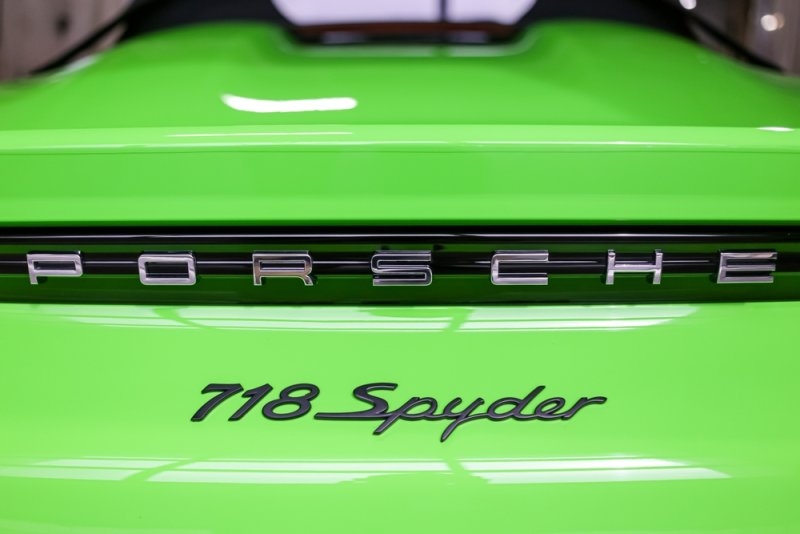
What Is the Interior of the 718 Spyder RS Like?
Step inside,e and it's pretty clear this isn't meant for a relaxing Sunday cruise. The cabin sticks to the essentials:
- carbon fiber reinforced bucket seats
- harness mounting points for track days
- a manual soft top that takes a bit of effort to raise and lower
- raised air intakes behind each seat that let more of that engine noise into the cabin
None of it is there for comfort. Porsche shaved weight everywhere it could, and the soft top being manual rather than automatic is part of that same philosophy: fewer mechanisms, less mass, more focus on what the car does when you actually drive it.
What Replaces the Combustion 718 Spyder?
In August 2026, Porsche CEO Michael Leiters confirmed the all-electric 718 is still on track, with production now set for 2027. It'll sit on a version of Porsche's electric platform built specifically to work with a mid-engine layout, so the low, tucked-in seating position that made the Boxster and Cayman feel the way they did should carry over.
Porsche has also hinted that future RS models in the 718 range will stick with combustion engines, but making that work on a platform designed around a load-bearing battery pack is a genuinely tricky engineering problem. Realistically, don't expect a gas-powered RS again before 2028 or 2029. That leaves a real gap for anyone who wants this exact kind of driving experience in the meantime.
Is the Porsche 718 Spyder RS Still Worth Buying in 2026?
If you're a collector or just someone who cares more about how a car drives than how it's classified, yes, absolutely. This is Porsche's last naturally aspirated mid-engine roadster, full stop, and that alone gives it a place in the story that's hard to replace.
The screaming flat six, the low weight, the way it responds to input, none of that is coming back in quite the same form anytime soon. You'll pay above the original sticker to get one, and you should plan for the running costs that come with a car tuned this hard.
But if what you want is one of the last purely gas-powered Porsches before this whole lineup goes electric, the Spyder RS already feels like a modern classic, and it didn't need decades to earn that.
Also Read: Porsche 911 Turbo S vs Ferrari 488 GTB: Which is Better?
Frequently Asked Questions
Is the Porsche 718 Spyder RS still in production in 2026?
No. Porsche stopped building the combustion 718 lineup, Spyder RS included, back in October 2025. What's left is dealer stock and used cars, and prices have already climbed past the original MSRP thanks to limited supply and steady demand from buyers.
How much does a used Porsche 718 Spyder RS cost now?
It started at $162,150 new, but used prices in 2026 usually land around $200,000 or higher depending on mileage, condition, and options like the Weissach package. Its status as the last combustion Boxster is really what's pushing values up.
What engine does the 718 Spyder RS use?
It's a naturally aspirated 4.0-liter flat six making 493 horsepower and 331 lb-ft of torque, the same engine as the Cayman GT4 RS and closely related to the 911 GT3's. It only comes paired with a seven-speed PDK dual-clutch gearbox.
Will Porsche make another combustion 718 Spyder?
Porsche has suggested future RS models in the 718 range will keep combustion engines, but building that into the new electric platform isn't simple. Don't expect a gas-powered version again until at least 2028 or 2029, so there's a real wait ahead.
When is the electric Porsche 718 coming out?
Porsche's CEO confirmed in August 2026 that the all-electric 718 is targeted for 2027 production. It'll use a dedicated electric platform designed to keep the low, mid-engine style seating position that's always defined the Boxster and Cayman.
Featured Video
The fastest Porsche 911 ever made | Turbo S
The Porsche 911 has a turbo boost button but you only have 20 seconds...
Comment using Facebook