« Articles
Porsche 718 Boxster vs BMW Z4 Real World Test Drive Review


Key Takeaways
- The 718 Boxster starts near $75,000, while the Z4 sDrive30i starts at $56,100, a meaningful price gap.
- Boxster horsepower ranges from 300 to 493 across the lineup, versus 255 to 382 horsepower on the Z4.
- The Z4 M40i is quicker on paper, hitting 0 to 60 mph in 3.9 seconds against the base Boxster's 4.3 seconds.
- Porsche uses a mid-engine layout for sharper balance, while BMW sticks with a front-engine setup.
- 2026 marks the final model year for the BMW Z4, which could affect resale value down the road.
- Both cars compete in a shrinking convertible sports car segment with few direct rivals left standing.
Porsche 718 Boxster vs BMW Z4: Which Roadster Wins Your Heart?
Choosing between the Porsche 718 Boxster and BMW Z4 is not an easy call. Both are two-seat convertibles built for people who love open-air driving. But they take very different paths to get there, and that difference matters more than most buyers expect. This Porsche 718 Boxster vs BMW Z4 comparison breaks down price, power, comfort, and daily usability so you can pick the right roadster for your budget and driving style. Think of it as a complete luxury roadster comparison built for real buyers, not just spec sheet enthusiasts.
Porsche 718 Boxster vs BMW Z4 Price Comparison
Money talks first in any car decision, and this comparison is no exception. The base Boxster with its turbo 2.0-liter flat four starts at $62,500, though most configured examples land closer to $75,000 once options get added. Climb to the GTS 4.0 trim and pricing pushes toward $90,000.
The Z4 undercuts it easily at the entry level. The sDrive30i starts at $56,100, and the six-cylinder M40i begins at $68,400. BMW even built a special send-off model, with the M40i Final Edition priced at $77,500.
| Trim Level | Porsche 718 Boxster | BMW Z4 |
| Entry Price | $62,500 to $75,000 | $56,100 |
| Top Trim | GTS 4.0, around $90,000 | M40i Final Edition, $77,500 |
| Engine Options | Flat four and flat six | Turbo four and turbo six |
If budget is the deciding factor, the Z4 wins this round outright.
Boxster vs Z4 Value for Money
Sticker price only tells half the story here. The Boxster carries the Porsche badge and mid-engine pedigree, which holds value better over time. The Z4 offers more standard tech and a lower entry cost, appealing to buyers who want thrills without the premium badge tax.
Porsche 718 Boxster vs BMW Z4 Performance Comparison
Performance is where enthusiasts spend most of their time debating. Both cars offer a spread of engines that change the character of the drive completely.
Boxster vs Z4 Engine and Power
The 718 Boxster lineup spans 300 to 493 horsepower, topping out with the track-focused Spyder RS. The base turbo four produces 300 hp, and Porsche also offers a 350 hp turbo four on the S trim and a 394 hp flat six on the GTS 4.0.
BMW keeps things simpler. The sDrive30i makes 255 horsepower from its 2.0-liter turbo four, while the M40i steps up to 382 horsepower from a 3.0-liter turbo six.
0 to 60 and Top Speed
Straight-line speed favors the Z4 at the top end. The M40i sprints from 0 to 60 mph in 3.9 seconds, edging out the standard Boxster's 4.3-second run. However, Porsche's higher trims close that gap fast, with top variants reaching track speeds up to 191 mph.
Numbers only tell part of the story, though. The Boxster's mid-engine layout gives it a planted, precise feel through corners that the front-engine Z4 cannot fully match.
Porsche 718 Boxster Review Snapshot
Every proper Porsche 718 Boxster review starts with that mid-engine layout, because it defines the entire personality of the car. The engine sits directly behind the driver and ahead of the rear axle, improving weight distribution and reducing rotational inertia. That single design choice sharpens steering response in a way few rivals can replicate.
Interior quality feels every bit as premium as the price suggests, with tight panel gaps and driver-focused controls throughout. Cargo space is modest, split between a small front trunk and a rear compartment, so packing for a weekend trip takes some planning. Owners consistently praise the exhaust note on six-cylinder trims, calling it one of the best-sounding engines in its class.
BMW Z4 Review Snapshot
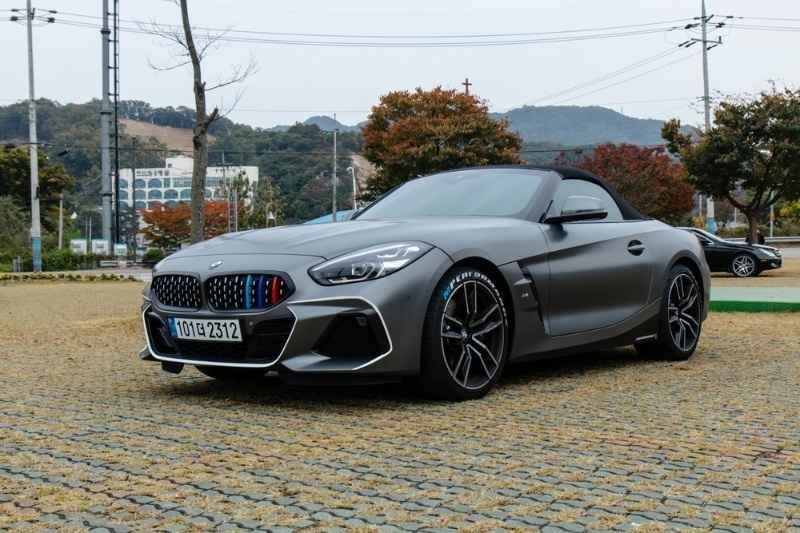
A fair BMW Z4 review has to mention how far the cabin tech has come, even in this car's final year on sale. The interior includes a 12.3-inch gauge cluster and a 10.25-inch touchscreen running BMW's updated iDrive 8.5 software. Wireless Apple CarPlay and Android Auto come standard, which the Boxster still charges extra for in some configurations.
Ride quality stands out as the Z4's biggest strength for daily use. The standard turbocharged engine delivers plenty of pep for a roadster while keeping the ride comfortable enough for regular commuting. Trunk space also beats expectations for a two-seat convertible, giving it a practical edge that many rivals lack entirely.
Porsche 718 Boxster vs BMW Z4 Driving Experience
This is where the Boxster truly separates itself. Its mid-engine configuration improves weight distribution and reduces rotational inertia, sharpening steering feedback in every corner. Porsche enthusiasts often describe the Boxster as feeling more connected and alive at any speed.
The Z4 leans into comfort and everyday composure instead. Reviewers note the chassis feels playful without being overly twitchy, and it stays composed through fast corners. Adaptive dampers soften the ride for daily commuting, then tighten up when Sport mode gets engaged.
Neither car disappoints behind the wheel. The Boxster rewards spirited drivers chasing apex precision, while the Z4 suits those who want a relaxed grand tourer with occasional bite.
Must Read: Porsche 911 AWD vs RWD: Which Drivetrain Should You Choose?
Best Luxury Roadster for Daily Driving
Daily usability separates weekend toys from cars you can actually live with. The Z4 wins here thanks to better fuel economy, a larger trunk, and a gentler ride in Comfort mode. Its 9.9 cubic foot trunk beats the Boxster's tighter cargo space by a noticeable margin.
The Boxster trades some comfort for engagement, with a firmer ride that rewards enthusiast drivers more than commuters. If your daily route includes grocery runs and long highway stretches, the Z4 feels friendlier. If your commute includes a few backroads you actually look forward to, the Boxster earns its keep.
Porsche 718 Boxster vs BMW Z4 Reliability
Reliability data favors neither car dramatically, but ownership costs diverge sharply. Porsche parts and service run noticeably higher, reflecting its premium positioning and lower production numbers. BMW's Z4 shares mechanical components with the Toyota Supra, which can simplify parts sourcing for owners.
Routine maintenance on the Boxster typically costs more per visit, though both cars remain reasonably dependable when serviced on schedule. Buyers focused on lower long-term costs generally lean toward the Z4.
Convertible Sports Car Comparison Beyond These Two
Any honest convertible sports car comparison should acknowledge the shrinking competition around both cars. This narrowing field still gives buyers a few distinct flavors to choose from, each with its own budget and personality.
| Model | Price Position | Standout Trait | Best For |
| Porsche 718 Boxster | Premium | Mid-engine balance and agility | Driving purists |
| BMW Z4 | Mid-range | Comfort and daily usability | Everyday roadster fans |
| Chevy Corvette Convertible | Similar to Boxster | More raw power, less compact agility | Straight-line performance seekers |
| Mazda MX-5 Miata | Budget | Lightweight, pure fun | Value-focused buyers |
Within this narrowing field, the Boxster and Z4 remain the two most balanced choices for buyers who want genuine luxury alongside real driving engagement.
Should You Buy the Porsche 718 Boxster or BMW Z4?
There is no universally right answer here, only the right answer for your priorities. Choose the Boxster if driving feel and brand prestige matter more than sticker price. Choose the Z4 if value, comfort, and everyday practicality top your list.
Both remain among the best convertible sports car options still sold today, competing in a market that keeps shrinking every year. Whichever you pick, you are buying into a driving experience that few other cars still offer.
Also Read: Porsche Family Car: The Best Models for Family Driving
Frequently Asked Questions
Which is better, a Porsche 718 Boxster or a BMW Z4?
Neither is universally better. The Boxster wins on driving precision and mid-engine balance, while the Z4 wins on price, comfort, and daily practicality. Your choice depends on whether you prioritize thrills or everyday ease.
Is the BMW Z4 cheaper than the Porsche 718 Boxster?
Yes, the Z4 sDrive30i starts around $56,100, well below the Boxster's roughly $62,500 to $75,000 starting range. Even the six-cylinder M40i undercuts most Boxster trims by several thousand dollars.
Does the Porsche 718 Boxster have more horsepower than the BMW Z4?
Across the full lineup, yes. The Boxster ranges from 300 to 493 horsepower, while the Z4 tops out at 382 horsepower with the M40i. Entry-level trims sit closer in output.
Why is 2026 the last year for the BMW Z4?
BMW is discontinuing the Z4 after the 2026 model year as the roadster segment shrinks industry-wide. This makes current models potential future collectibles, though resale patterns remain uncertain for now.
Is the Porsche 718 Boxster reliable for daily use?
It can be, though maintenance costs run higher than mainstream alternatives. Regular servicing keeps it dependable, but owners should budget more for repairs and parts compared to a BMW Z4 over the same ownership period.
Featured Video
The fastest Porsche 911 ever made | Turbo S
The Porsche 911 has a turbo boost button but you only have 20 seconds...
Comment using Facebook