« Articles
Porsche 918 Spyder vs 2026 911 Turbo S: Key Differences

Key Takeaways
- The 918 Spyder hasn't been built since 2015, but its 887-hp V8-electric powertrain still runs 0-60 mph in the low 2-second range with a top speed past 200 mph.
- The new 2026 911 Turbo S makes 701 hp and 590 lb-ft from a hybrid twin-turbo flat-six, hitting 60 mph in about 2.4 seconds.
- Only 918 examples of the Spyder were ever made, and it was one of the first production cars to break the seven-minute barrier at the Nürburgring.
- A one-of-one 918 Spyder sold for $6.05 million at Mecum's Kissimmee auction in January 2026 — well over six times its original sticker.
- The 911 Turbo S starts at $270,300 for the coupe, $284,300 for the Cabriolet, before Porsche's destination fee.
There's something almost unfair about putting these two cars in the same sentence. One is a hybrid hypercar that Porsche stopped building over a decade ago and that now lives mostly in climate-controlled garages and auction catalogs. The other just rolled out of Zuffenhausen with a brand-new hybrid heart of its own, and you can walk into a dealership and order one right now. So why compare them at all? Because the 2026 911 Turbo S is finally closing in on numbers that used to belong exclusively to the 918 — and that's a story worth telling.
Design and Performance, a Decade Apart
One of these cars was designed to be the fastest thing Porsche had ever built. The other was designed to be the fastest 911 Porsche has ever built. Both goals, it turns out, get you to roughly the same place.
1. Design and Style
The 918 Spyder still looks like nothing else Porsche has made before or since. Even now, its low, wide body and exposed carbon details draw a crowd wherever it shows up — it was ahead of its time in 2013 and hasn't really been caught since.
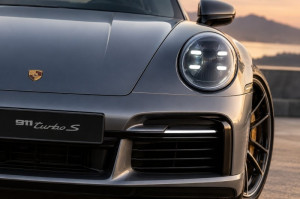
The 911 Turbo S, meanwhile, just got its biggest visual update in years for the 992.2 generation. It's wider now, with a new four-point LED signature up front and taillights that look like they were carved rather than molded on. It's still unmistakably a 911 — Porsche never messes with that silhouette too much—but it wears the extra aggression well.
2. Performance and Power
Here's where things get genuinely interesting. The 918 Spyder's numbers haven't changed since it left the factory: 887 horsepower from a naturally aspirated V8 paired with electric motors, 0-60 mph in the low 2-second range, and a top speed north of 200 mph. Those were hypercar-only figures a decade ago.
The 911 Turbo S just took a real swing at that territory. Its new 3.6-liter twin-turbo flat-six borrows Porsche's T-Hybrid tech, with a pair of electric turbochargers helping it make 701 horsepower and 590 lb-ft of torque. That's good for a claimed 2.4-second 0-60 run, and Porsche says it lapped the Nürburgring 14 seconds faster than the outgoing car — 7:03.92, for the record. The gap to the 918 is still there. It's just a lot smaller than it used to be.
Living With Them
Numbers on a spec sheet are one thing. How a car actually behaves on a road, or in a garage, is another — and this is where the age gap between these two really shows.
1. Handling and Driving Experience
The 918's chassis tech was wild for its era and still holds up today. Rear-axle steering and torque vectoring give it genuinely sharp reflexes, and its all-wheel-drive system means it doesn't punish you for driving it hard.
The Turbo S had to earn its extra power with hardware to match. It pairs the new engine with an eight-speed PDK that has its own electric motor built in, plus Porsche's all-wheel-drive system and a wider, grippier tire setup that works in the wet as well as the dry. The brakes got bigger rear rotors and new pads for the added performance, and the hybrid battery doubles as the power source for the car's active suspension and front-axle lift — a nice bit of engineering efficiency.
2. Interior Comfort and Technology
Step inside a 918 Spyder and you're sitting in a time capsule that was genuinely futuristic when it was new — carbon fiber everywhere, a driver-focused cockpit, and a touchscreen setup that felt cutting-edge in 2013.
The Turbo S benefits from everything Porsche has learned since. The whole 2026 lineup — 911, Panamera, Cayenne, Taycan — picked up an updated infotainment system, and the Turbo S adds its own flourishes on top: 18-way adaptive sport seats with memory settings, "Turbo S" stitched into the headrests, and Turbonite trim against a mostly carbon interior. The coupe seats two by default with rear seats as a no-cost option; the Cabriolet only comes as a 2+2.
Must Read: Porsche Performance Upgrades: Important Things to Know
What They Actually Cost in 2026
This is the part where the comparison stops feeling fair, because one of these is a fixed-supply collector's item and the other is a car you can configure online this afternoon.
1. The 918 Spyder Is Now a Serious Investment
Back in 2013, an 845,000 dollar starting price felt almost absurd. It doesn't anymore. Standard 918s are trading around $2.7 million today, and Weissach-package cars push closer to $3 million. A one-of-one Pure Orange example blew past all of that in January 2026, hammering for $6.05 million at Mecum's Kissimmee sale, and a Weissach car in a custom Riviera Blue finish brought $4.68 million at Broad Arrow's Porsche-focused Air|Water auction not long after. With exactly 918 cars ever built, that number only has room to move one direction.
2. The 911 Turbo S Is Still (Relatively) Attainable
The Turbo S, by comparison, is refreshingly ordinary in how you buy one. Porsche's official pricing sits at $270,300 for the coupe and $284,300 for the Cabriolet, before the $2,350 delivery fee. It's not cheap by any normal measure, and it's a noticeable jump over the outgoing model, but it's still a car you can special-order rather than chase at auction.
Conclusion
In conclusion, the Porsche 918 Spyder and the 2026 911 Turbo S are both exceptional sports cars that represent the pinnacle of automotive engineering and performance in their respective eras. The 918 Spyder stands out with its hybrid powertrain, futuristic design, and cutting-edge technology, while the 911 Turbo S offers a timeless appeal, powerful performance, and engaging driving experience.
Whether you prefer the avant-garde styling and high-tech features of the 918 Spyder or the classic design and exhilarating performance of the 911 Turbo S, both cars are sure to leave a lasting impression. Whichever one you choose, you can't go wrong with either of these iconic Porsche models. So, which one will you pick for your next adrenaline-fueled adventure on the road?
Frequently Asked Questions
Can you actually still buy a Porsche 918 Spyder?
Not new, no. Porsche built exactly 918 of them between 2013 and 2015, and that's it — every car out there is from that original run. If you want one today, you're buying it from a collector or at auction, not a dealership.
Is the 2026 911 Turbo S really faster than before?
Yes, noticeably. It jumped to 701 horsepower — 61 more than the previous Turbo S — thanks to a new hybrid system with electric turbochargers, and it's quick enough now to lap the Nürburgring 14 seconds faster than the car it replaced.
Why has the 918 Spyder gotten so expensive?
Simple supply and demand. Only 918 were ever made, it's one of the "Holy Trinity" hybrid hypercars collectors chase, and prices have climbed steadily for years — one example sold for over $6 million in early 2026.
What's actually new about the Turbo S's engine?
It's Porsche's first hybridized Turbo S. The 3.6-liter flat-six now uses two electric turbochargers for near-instant response, plus an electric motor built into the transmission, all fed by a small 1.9-kWh battery.
Which one is quicker to 60 mph?
The 918 Spyder still wins by a hair, running the low 2-second range compared to the Turbo S's claimed 2.4 seconds — but that gap has shrunk a lot compared to older Turbo models.
Can I order a 2026 911 Turbo S right now?
Yes. It's a current production car, priced from $270,300 for the coupe and $284,300 for the Cabriolet before the delivery fee, and it's available to configure and order through Porsche dealers today.
Featured Video
The fastest Porsche 911 ever made | Turbo S
The Porsche 911 has a turbo boost button but you only have 20 seconds...
Comment using Facebook