« Articles
How Does Porsche Regenerative Braking Boost Your EV Range?


Key Takeaways
- Porsche regenerative braking turns the electric motors into generators, so every slowdown sends energy back to the battery.
- Porsche says recuperation can add up to 30 percent more range, though real results vary.
- In the Taycan, about 90 percent of everyday braking happens electrically, which spares your pads and rotors.
- Porsche favors smooth coasting over aggressive one-pedal driving to avoid wasted energy.
- A cold or nearly full battery limits how much energy comes back.
Here’s something most drivers never think about. In a gas car, braking turns motion into heat and wastes it. Porsche regenerative braking flips that script by sending a slice of that motion back to the battery. Let’s see how it works, what you gain, and where it falls short.
What is Porsche Regenerative Braking?
Porsche regenerative braking means the electric motors help slow the car while making electricity at the same time. Porsche calls the process recuperation. Rather than wasting speed as heat in the brake discs, the car banks a good share of it in the high-voltage battery for later.
How Does Porsche Regenerative Braking Work?
Picture a quiet handoff happening every time you slow down. The moment you lift off the accelerator or touch the pedal, the car decides how much of the slowing comes from the motors and how much from the friction brakes. You never feel the decision, and that’s the whole idea.
Motors Turn Into Generators
Usually the motors push the wheels. During deceleration, the roles swap, and the wheels push the motors. That resistance slows the car down and creates electricity, which flows into the battery. Think of a bicycle dynamo, just far stronger and far better managed.
Friction Brakes Step In Only When Needed
Porsche says the Taycan handles about 90 percent of everyday braking with the motors alone. The hydraulic brakes join in below roughly 5 km/h, or whenever you ask for more stopping power than recuperation can give. Because the handover is blended, the pedal still feels natural.
What Does Porsche Recuperation Management (PRM) Do?
Porsche Recuperation Management (PRM) is the control logic behind the Porsche regenerative braking system. It coordinates the motors and the hydraulic brakes so braking feels like one consistent pedal. Speed, battery condition, and how hard you press all shape the split between them.
How Porsche Regenerative Braking Charges the Battery?
The electricity made during braking passes through the power electronics, which convert it into the form the high-voltage battery needs. Porsche notes that two seconds of deceleration at 290 kW can produce enough energy for roughly another 700 meters. Small gains add up.
Porsche Taycan Regenerative Braking Explained
Porsche says the updated Taycan lifted peak recuperation from 290 kW to as much as 400 kW when slowing from high speeds, a jump of more than 30 percent. You get strong, repeatable braking while the friction brakes stay cool and fresh for hard stops.
Does Regenerative Braking Improve Porsche Battery Range?
Yes, though it isn’t magic. Porsche says recuperation can increase range by up to 30 percent. Your own results depend on traffic, terrain, temperature, and how smoothly you drive. Lifting off the accelerator early and gently recovers far more energy than late, hard braking.
How Does Porsche Energy Recuperation Work in Hybrids and EVs?
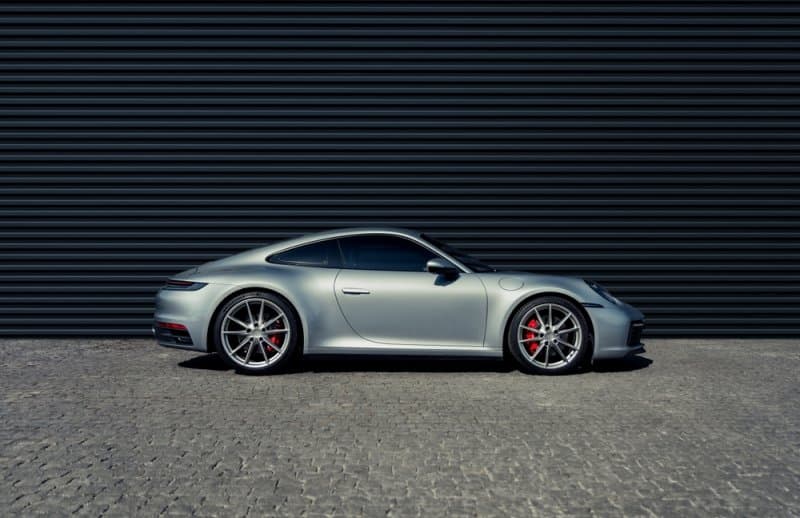
The core idea stays the same across the lineup, but the experience changes. Fully electric models lean on bigger batteries and stronger motors. Plug-in hybrids use recuperation to top up the battery for electric driving. Here’s how the main groups compare.
| Model type | What recuperation does |
| Taycan, Macan Electric, Cayenne Electric | Motors recover energy on lift-off and braking |
| Cayenne E-Hybrid and Panamera E-Hybrid | Energy helps recharge the high-voltage battery |
Do Porsche E-Hybrids Recover Energy Too?
They do. In the Cayenne E-Hybrid and Panamera E-Hybrid, braking energy helps recharge the high-voltage battery, which supports electric driving around town. Buyers weighing the Porsche Panamera against the BMW 7 Series should look at this feature too, because it affects running costs.
What are the Porsche Regenerative Braking Benefits?
The Porsche regenerative braking benefits go well beyond range. They show up in your energy use, your brakes, and the way the car feels on the road. Here are the three owners' notices. Each one is small, but together they matter.
Porsche Braking Efficiency
Porsche braking efficiency improves because less energy disappears as heat. Every lift-off becomes a small deposit in the battery. Over a full week of mixed driving, those deposits cut the grid power you need and stretch every charge a little further.
Longer Brake Life
Because the motors handle most everyday stops, pads and rotors see less wear and less heat. Many EV owners report brake parts lasting longer than on comparable gas cars. You still need regular inspections since rarely used brakes can corrode or glaze over time.
Smoother Control
Strong recuperation gives you precise speed control in traffic and on long downhill stretches. Many models let you adjust how firmly the car slows when you lift off. Once you learn the screen through a few Porsche infotainment system setup tips, spotting the energy flow display becomes easy.
What Limits Porsche Brake Energy Recovery?
Porsche brake energy recovery is not unlimited. A battery near full charge can’t accept much extra energy, and a very cold battery restricts the flow too. When that happens, the friction brakes pick up the slack, so the pedal feels familiar but your range gains shrink.
Conclusion
Porsche regenerative braking quietly turns every slowdown into a small refill for the battery. It stretches range, protects the brakes, and keeps the pedal feeling natural, all without asking anything extra from you. The gains aren’t unlimited, since cold weather and a full battery hold them back. Still, a smooth driver who lifts off early will notice the difference. Learn how recuperation behaves in your own model, try different settings on a calm road, and let the car do the quiet work for you.
Frequently Asked Questions
What is Porsche regenerative braking?
It uses the electric motors as generators when you lift off or brake. That resistance slows the car and sends electricity to the high-voltage battery instead of wasting the energy as heat.
How much of everyday braking is electric in a Taycan?
Porsche says about 90 percent of everyday braking in the Taycan happens through the electric motors alone. The hydraulic brakes handle the rest, mainly at very low speeds or during harder stops.
Does Porsche prefer one-pedal driving?
Not really. Porsche favors coasting because one-pedal driving recovers energy first and then converts it back into motion, which doubles the losses. You can still choose stronger recuperation when descending long hills.
When do the friction brakes take over?
Hydraulic braking engages below about 5 km/h and whenever you need more stopping force than recuperation can provide. The car blends both systems, so the switch should feel smooth rather than abrupt.
Can cold weather reduce regenerative braking?
Yes. A very cold battery or a nearly full one limits how much energy it can accept, so the friction brakes do more work and your range gains may be smaller than usual.
Featured Video
The fastest Porsche 911 ever made | Turbo S
The Porsche 911 has a turbo boost button but you only have 20 seconds...
Comment using Facebook