« Articles
Audi R8 vs Porsche 911: Which Supercar is Worth Your Money?


Key Takeaways
- The R8 is a mid-engine, naturally aspirated V10. The 911 is a rear-engine turbo flat-six. Totally different flavours.
- Used Carreras cost less than an R8, but a Turbo S can cost more than any of them.
- Daily life is easier in the 911: more storage, rear seats, lower fuel bills.
- Both cars are tough if the service history is clean.
- Want drama? Go R8. Want a car you’ll actually use? Go 911.
Two German icons pull up beside you at a red light. One barks like a ten-cylinder animal. The other sounds calm, almost polite, until the light turns green. That’s the Audi R8 vs Porsche 911 debate in a nutshell, and I’ll be straight with you: neither answer is wrong. What matters is your budget, your garage and what makes you smile. So let’s sort it out, no jargon, no fluff.
What is the Audi R8?
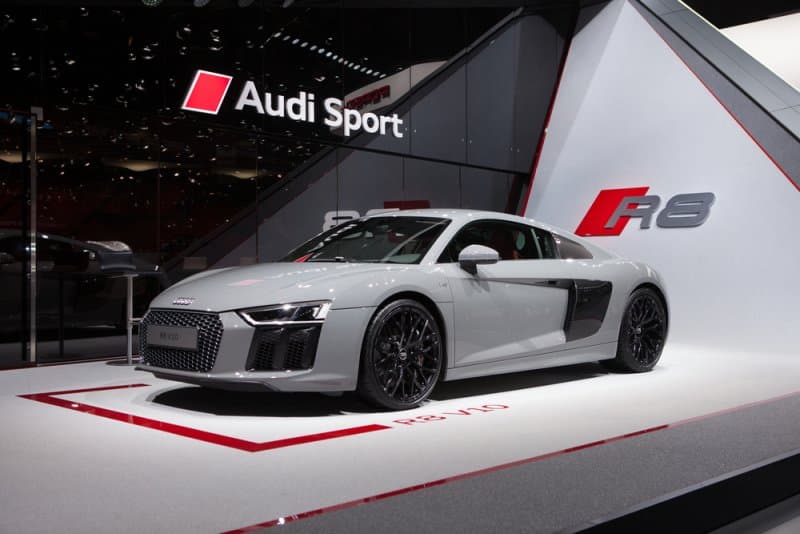
The R8 is Audi’s answer to the question, what if we built a proper supercar? It shares its bones with the Lamborghini Huracán, and you can feel that family tie. The engine sits behind your shoulders: a naturally aspirated 5.2-litre V10 that happily spins past 8,500 rpm. Two seats, a low roof, a wide stance. You pick rear-wheel drive or quattro, and the gearbox is a seven-speed S tronic.
What is the Porsche 911?
The 911 has been on sale since 1964, and Porsche keeps refusing to rewrite the formula. Flat-six engine, hung out behind the rear axle. Odd? Yes. Brilliant? Also yes. The current 992 generation goes turbo on most trims, though the GT3 still screams along naturally aspirated. You’ll find manual and PDK options, plus two small rear seats that are better for bags than people.
Must Read: Porsche PDK vs Manual: Which Gearbox Should You Buy Today?
What are the Audi R8 vs Porsche 911 Differences?
So what are the real Audi R8 vs Porsche 911 differences? Start with where the engine lives. Audi puts it in the middle, which gives you balance and a dramatic cabin soundtrack. Porsche puts it at the back, which gives you traction and a slightly quirky feel. Everything else flows from that choice. Here’s the quick side-by-side, covering size, seats, storage and thirst.
| Feature | Audi R8 | Porsche 911 |
| Engine layout | Mid-engine V10 | Rear-mounted flat-six |
| Seats | 2 | 2+2 |
| Width | 1,940 mm | 1,852 mm |
| Front trunk | 112 litres | 132 litres |
| Gearbox | 7-speed S tronic only | Manual or PDK (varies by trim) |
| Real-world fuel use | About 14–15 l/100 km | About 11–14 l/100 km |
Audi R8 vs Porsche 911 Performance: How do They Compare?
Spec sheets never tell the whole story, but they’re a fair place to begin. Audi R8 vs Porsche 911 performance changes a lot with the trim you choose. Porsche sells everything from a mild Carrera to a 640-horsepower Turbo S. Audi sticks with one V10 in two states of tune. Fewer choices, sure, but nothing about it feels slow. So how close are they, really?
Audi R8 vs Porsche 911 Horsepower
On paper, the R8 V10 Performance Quattro makes 620 hp, and the rear-drive car makes about 560. Porsche spreads things out: roughly 385 hp in the Carrera, 440 in the Carrera S, nearly 480 in the GTS. Only the Turbo S, at around 640, beats the quattro R8. But numbers hide the feel. The Porsche’s turbos shove you hard from low revs, while the Audi saves its best for the top.
Audi R8 vs Porsche 911 Acceleration
Honestly, both feel ridiculous. The R8 V10 Performance Quattro gets to 62 mph in about 3.1 seconds. A Carrera S with PDK needs roughly 3.5 seconds, while the Turbo S storms there in about 2.7. So, which is faster? In a straight line, the Turbo S wins. Pick a Carrera, Carrera S, or GTS and the R8 keeps up, or pulls ahead.
Audi R8 vs Porsche 911 Handling
Here’s where the personalities split. The R8 is wide and low, with a long wheelbase, so it feels planted at speed, and the rear-drive version can be a proper laugh. The 911 has a short wheelbase, so it darts into corners, and the steering tells you everything the front tyres are doing. Add rear-axle steering, and it gets sharper still. Porsche feels precise. Audi feels theatrical. Neither lets go easily.
Top Pick: Porsche Track Day Preparation: What to Check Before You Go?
Audi R8 vs Porsche 911 Price: Which One Costs Less?
Buying used is where it gets interesting. In four-year-old European listings, a Carrera or Carrera 4S starts around €107,000. A rear-drive R8 starts closer to €127,000. Audi R8 vs Porsche 911 price flips at the top, though, because a Turbo S can sail past €200,000. And Porsche options are famously expensive, so two cars that look identical online can be priced thousands apart.
| Model (2021–2022) | Approx. used price |
| 911 Carrera / 4S | €107,000–€131,000 |
| R8 V10 RWD | €127,000–€148,000 |
| 911 GTS / Targa | €144,000–€172,000 |
| R8 V10 performance quattro | €152,000–€185,000 |
| 911 Turbo / Turbo S | €189,000–€226,000+ |
Prices are approximate and vary by market.
Audi R8 vs Porsche 911 Reliability: Which Lasts Longer?
Good news first: neither car is a nightmare by supercar standards. Audi R8 vs Porsche 911 reliability is a close call, and honestly, the previous owner matters more than the badge. A thick folder of service receipts beats a low odometer every time. Both cars chew through expensive tyres and brakes, so keep a repair fund. Budget for that before you fall in love.
1. Common Audi R8 Problems
The V10 itself is tough as old boots. The trouble spots sit around it. Magnetic Ride dampers can leak at higher mileage, and a fresh set hurts the wallet. Carbon can gum up the intake valves, so ask if they’ve been cleaned. On a cold start, listen for rattling, because that can point to timing chain wear. Last, make sure the gearbox doesn’t jerk in slow traffic.
2. Common Porsche 911 Problems
The 992 isn’t perfect either. The three-litre cars sometimes develop water pump or coolant leaks. If the car has Sport Chrono, watch for PADM engine mount warnings, which cost real money to fix. Some owners also report infotainment glitches and the odd cabin rattle. Ask for an over-rev report before buying. So, Audi R8 vs Porsche 911 which is more reliable? Slightly the Porsche, since servicing is cheaper and dealers are everywhere.
Which is Better for Daily Driving?
The 911. It’s narrower, you can actually see out of it, and it gives you 132 litres up front plus rear seats for jackets or a small child. Fuel is kinder too, around 11 to 14 l/100 km versus 14 to 15 in the R8. The Audi rides surprisingly well, but it’s wide, and parking gets stressful.
Which is Better: Audi R8 or Porsche 911?
Everyone asks which is better: Audi R8 or Porsche 911, and I wish there was a one-line answer. There isn’t. Both are fantastic; they just reward different people. Ask yourself three things: how often will you drive it, who’s riding along, and what do you want to feel when the engine wakes up? Take a minute with that. Your answers will point the way.
Pick the Audi R8 If…
You love sound and theater. A naturally aspirated V10 is a dying breed, and that rarity might help its value down the road. It fits weekend blasts and special occasions, especially if you already own a sensible daily car. Don’t mind tiny luggage space? Want heads turning at every junction? Then the R8 is your car. It’s emotion first, logic second.
Pick the Porsche 911 If…
You want one car to do it all. The 911 gives you more trims, a manual option, better safety tech, and an easier resale. It costs less to get into, it’s simple to live with, and it’s still a riot on a twisty road. Plan to drive often or take long trips? The Porsche makes more sense. It’s hard to argue with.
Conclusion
There’s no single winner in the Audi R8 vs Porsche 911 fight, and that’s the fun of it. The R8 offers a rare V10, jaw-dropping looks and a soundtrack you’ll never forget. The 911 offers balance, usability, and a trim for every taste. If you can, drive both back to back. Get any used one inspected properly. Then buy the car that makes you grin like an idiot.
Frequently Asked Questions
What is the main difference between the Audi R8 and the Porsche 911?
The R8 is a mid-engine, two-seat supercar with a naturally aspirated V10. The 911 is a rear-engine sports car with a turbocharged flat-six, rear seats, and extra storage, making it more practical for everyday use.
Is the Audi R8 faster than the Porsche 911?
Sometimes. While the R8 V10 performance quattro beats most Carrera models with its 3.1-second 0–62 mph time, the 911 Turbo S bests both with a 2.7-second sprint.
Which car is cheaper to buy used?
The Porsche 911 usually costs less to enter, with used Carrera models starting near €107,000. The R8 starts around €127,000. However, high-end 911 Turbo S cars can cost more than any R8.
Does the Audi R8 have better resale value than the Porsche 911?
Historically, the 911 holds value more steadily thanks to huge global demand. The R8, however, is gaining collector interest because it’s one of the last naturally aspirated V10 supercars, so values may stay strong.
Can you use the Audi R8 as a daily driver?
Yes, but with compromises. The R8 rides comfortably with optional adaptive dampers, yet it’s wide, has only 112 litres of luggage space and drinks more fuel. The 911 is the easier everyday companion.
Featured Video
The fastest Porsche 911 ever made | Turbo S
The Porsche 911 has a turbo boost button but you only have 20 seconds...
Comment using Facebook