« Articles
Corvette E-Ray vs Porsche 911 Hybrid (2026): Which Hybrid Sports Car Actually Wins?


Key Takeaways
- The 2026 Corvette E-Ray now makes 655 combined horsepower and starts at $108,600, undercutting the Porsche 911 Hybrid GTS by roughly $60,000.
- Chevrolet claims a 2.5-second 0-60 mph time for the E-Ray; independent testing puts it closer to 2.8 seconds — nearly identical to the 911 GTS Hybrid.
- The Porsche 911 GTS Hybrid produces 532 hp and 449 lb-ft, using a T-Hybrid single-turbo system rather than the E-Ray's front-axle electric motor.
- E-Ray is standard all-wheel drive; the 911 GTS Hybrid is rear-wheel drive unless you step up to the 4 GTS.
- Both cars now offer genuine everyday usability, but they solve very different problems — value-driven brute force versus refined, badge-backed precision.
Why Compare These Two in 2026?
Hybrid sports cars stopped being a novelty a while ago. By 2026, electrification is simply how flagship performance cars hit their numbers — not a compliance checkbox bolted on to satisfy regulators.
The Corvette E-Ray and Porsche 911 Hybrid remain the two clearest examples of this shift in the mid-six-figure (and sub-six-figure) sports car world. Both blend combustion power with electric assist, but they arrive at that formula from completely opposite philosophies — one chasing traction and value, the other chasing precision and pedigree.
That contrast is exactly what makes this matchup worth revisiting now that both cars have received meaningful 2026 updates.
What's New for 2026?
Chevrolet gave the E-Ray a meaningful refresh rather than a full redesign, focusing on the cabin and daily usability:
- A new triple-display cockpit with a 12.7-inch touchscreen and Google built-in
- A reorganized center console with a toggle drive-mode selector and wireless charging
- "Stealth Mode," letting the car run on electric power alone up to 45 mph
- MSRP held nearly flat versus 2025, despite the added technology
Porsche's headline 2026 move was the Turbo S Hybrid, now the most powerful 911 ever built at 701 hp. But for a fairer, apples-to-apples comparison against the E-Ray's price and mission, the 911 Carrera GTS Hybrid (and its all-wheel-drive 4 GTS sibling) is the more relevant matchup. Both trims represent the "everyday hybrid performance" sweet spot in their respective lineups, rather than the halo cars at the very top.
How Do They Compare on Paper?
Spec | 2026 Corvette E-Ray | 2026 Porsche 911 GTS Hybrid |
Starting price | $108,600 | ~$172,000 |
Combined output | 655 hp | 532 hp / 449 lb-ft |
Engine | 6.2L V8 + front e-motor | 3.0L twin-turbo flat-six + T-Hybrid |
0-60 mph | 2.5–2.8 sec (claimed/tested) | 2.8–2.9 sec |
Top speed | 183 mph | ~194 mph |
Drivetrain | Standard AWD | RWD (AWD on 4 GTS) |
Transmission | 8-speed automatic | 8-speed PDK |
Quarter mile | 10.5–10.7 sec | ~10.7 sec |
The horsepower gap looks dramatic on paper, but real-world performance is much closer than the spec sheet suggests — a theme that carries through the rest of this comparison.
Powertrains: Two Very Different Hybrid Philosophies
Corvette E-Ray keeps things mechanically simple. A naturally aspirated 6.2-liter V8 drives the rear wheels, while a front-mounted electric motor adds instant torque and, for the first time in Corvette history, standard all-wheel drive. There's no plug, no external charging — the battery tops up through regenerative braking and engine operation.
Porsche 911 GTS Hybrid takes the opposite route. Its T-Hybrid system pairs a single electric turbocharger with a compact 400V battery, eliminating turbo lag rather than simply adding raw thrust. It's a precision tool built for throttle response, not a horsepower add-on chasing bigger numbers.
- E-Ray: power through displacement + AWD traction
- 911 GTS: power through turbo efficiency + chassis finesse
Neither system is trying to replicate the other. Chevrolet is solving for grip and acceleration; Porsche is solving for response and consistency.
Which One is Actually Faster?
On a straight line, they're closer than you'd expect. Chevrolet's claimed 2.5-second 0-60 mph time is quicker than Porsche's 2.8-second GTS figure — but real-world testing narrows that gap significantly, with both cars landing in the same 2.7–2.9 second neighborhood once independent testers get involved.
Where Porsche pulls ahead is top speed and sustained high-speed stability, thanks to lighter overall weight, a more aerodynamically efficient shape, and active aero elements that keep the car planted well past highway speeds.
The E-Ray's advantage shows up earlier in the run — off the line and through the quarter-mile — rather than at the top end of the speedometer.
Handling: Brute Traction vs Balanced Precision
- E-Ray: All-wheel drive gives it exceptional grip out of corners and in mixed weather — Michelin Pilot Sport All Season 4 tires are standard, making it genuinely usable year-round, even in light snow.
- 911 GTS: Rear-wheel steering, adaptive air suspension, and a lower curb weight favor a more surgical, feedback-rich driving feel — the kind enthusiasts pay a premium for.
Neither approach is objectively "better." It depends on whether you value composure at the limit in all conditions or outright confidence and feel on a dry, twisty road.
Interior and Everyday Livability
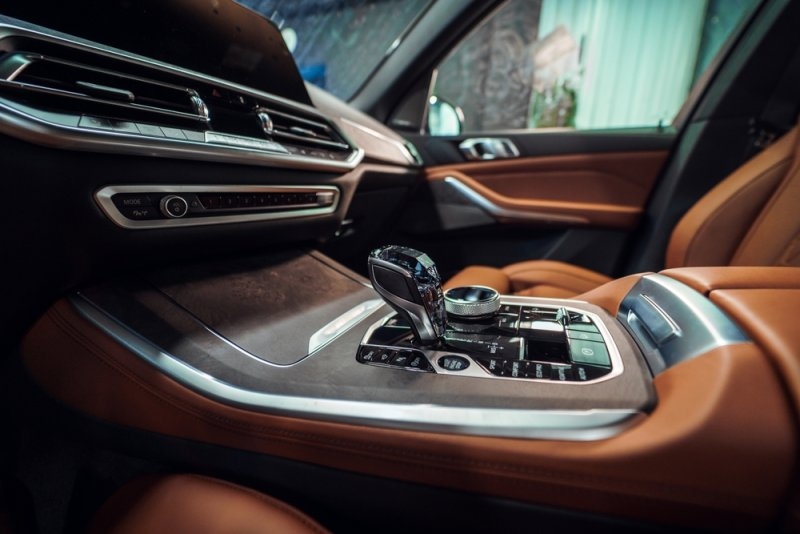
This is where the 2026 update actually changes the conversation. Reviewers had criticized the E-Ray's cabin for years, and Chevrolet's redesigned triple-screen layout, simplified controls, and relocated HVAC panel directly address that complaint — closing much of the gap to Porsche's cabin quality.
The 911 still holds an edge in material feel and long-term ergonomic refinement, built on decades of iteration. But the practical distance between the two interiors is narrower in 2026 than it has been in years.
What Does Each Car Cost to Own?
Factor | Corvette E-Ray | Porsche 911 GTS Hybrid |
Entry price | $108,600 | ~$172,000 |
Fully loaded price | ~$126,000 | $220,000+ |
Warranty | 3 yr/36k bumper-to-bumper, 5 yr/60k powertrain | Standard Porsche warranty |
Positioning | Performance-per-dollar | Prestige + precision engineering |
The price gap has actually widened since 2024 — the E-Ray held its MSRP nearly flat for 2026, while Porsche's hybrid trims climbed alongside the new T-Hybrid hardware rollout.
So, Which Should You Actually Buy?
- Choose the Corvette E-Ray if you want the fastest, most track-capable Corvette for the money, daily-drivable AWD grip, and don't need a badge to justify the price.
- Choose the Porsche 911 GTS Hybrid if you prioritize chassis feedback, top-speed composure, and decades of 911 pedigree — and budget isn't the deciding factor.
Both cars prove the same point from different directions: electrification hasn't softened performance cars — it's sharpened them, each in a way that stays true to its brand's identity.
Frequently Asked Questions
Is the Corvette E-Ray faster than the Porsche 911 Hybrid?
In independent testing, both land around 2.7–2.9 seconds to 60 mph, making them nearly even. Chevrolet's claimed 2.5-second figure is quicker on paper, but the Porsche 911 GTS Hybrid holds the advantage at higher speeds and top-end stability.
Why is the Corvette E-Ray so much cheaper than the 911 Hybrid?
Chevrolet makes the E-Ray using a mid-engine base that is also used for other Corvette models. That shared setup helps keep the factory costs down. Porsche sets its prices for a different reason. The company leans into brand value, makes fewer cars, and deals with a more involved system for turbo-plus hybrid work. It is not just about horsepower for the money.
Does the Porsche 911 Hybrid come in all-wheel drive?
Yes, but not standard. The rear-wheel-drive GTS is the base hybrid trim; buyers wanting all-wheel traction similar to the E-Ray need the 911 4 GTS or higher trims like the Turbo S, which adds high cost.
Can the Corvette E-Ray drive on electric power alone?
Yes. The 2026 E-Ray's "Stealth Mode" allows short-distance electric-only driving up to 45 mph, useful for quiet neighborhood exits or low-speed maneuvering. It's not a plug-in system, though — the battery charges through regenerative braking and engine operation.
Is the Porsche 911 Hybrid a plug-in hybrid?
No. Both the 911 GTS Hybrid and Turbo S Hybrid use self-charging "T-Hybrid" systems focused on performance, not electric range. The small battery recharges via regenerative braking and exhaust heat recovery, not an external charging port.
This content was created by AI
Featured Video
The fastest Porsche 911 ever made | Turbo S
The Porsche 911 has a turbo boost button but you only have 20 seconds...
Comment using Facebook