« Articles
Porsche Panamera vs BMW 7 Series: Which Luxury Sedan Wins?


Key Takeaways
- If you love driving, the Porsche Panamera is the sedan that will keep you grinning on every corner.
- If you spend more time in the back seat, the BMW 7 Series feels like the smarter pick.
- Porsche’s dealer site lists a base 2025 Panamera at $102,800, though trims and options push that number up fast.
- The Panamera is shorter and more agile, while the 7 Series is longer, softer, and built around its passengers.
- Drive both on roads you know well, since seat comfort and steering feel matter more than any spec sheet.
Picking between two flagship luxury sedans sounds like a nice problem to have, until every number starts looking equally impressive. Both cars promise comfort, speed, and plenty of prestige, yet they go about it in surprisingly different ways.
So let’s compare Porsche Panamera vs BMW 7 Series on price, specs, performance, space, and comfort, step by step.
Porsche Panamera vs BMW 7 Series: Quick Overview
Think of the Panamera as a sports car that happened to grow two extra doors and a proper back seat. Think of the BMW 7 Series as a rolling lounge, where the best seat is behind the driver. Neither choice is wrong, so the real question is whether you’ll mostly be driving or being driven.
Porsche Panamera vs BMW 7 Series Price: What Will You Pay?
Porsche’s dealer site lists the 2025 Panamera at a starting MSRP of $102,800, before taxes, fees, and any options. Climb the ladder, and things get pricey, with the GTS near $154,200 and the Turbo S E-Hybrid near $201,800.
BMW’s pricing shifts with trim, powertrain, and market, so pull up a current configurator before you compare exact figures.
| Panamera Trim | Starting MSRP (Porsche-listed) |
| Panamera | $102,800 |
| Panamera 4 | $109,800 |
| Panamera 4S E-Hybrid | $126,800 |
| Panamera GTS | $154,200 |
What Changes the Final Price?
Wheels, paint, engine choice, and driver-assistance packs can quietly push your final invoice far above that tempting base figure. Financing, insurance, and depreciation matter too, because big luxury sedans often lose value faster than people expect.
Ask each dealer for a written out-the-door quote, so you’re comparing real offers instead of rough guesses.
Porsche Panamera vs BMW 7 Series Specs: How Do They Compare?
Porsche’s comparison page pairs a 2.9L biturbo V6 in the Panamera against a 3.0L turbocharged inline-six in the BMW.
| Spec | Porsche Panamera | BMW 7 Series |
| Base engine | 2.9L biturbo V6 | 3.0L turbo inline-six |
| 0-60 mph | 3.6 seconds (GTS) | 4.9 seconds |
| Top speed | 188 mph (GTS) | 155 mph |
| Electrified options | E-Hybrid trims | Plug-in hybrid and i7 electric |
Porsche credits the 3.6-second sprint and 188 mph top speed to the 493-horsepower GTS, not the base car. Since a Porsche dealer published these numbers, treat the BMW figures as a rough guide and double-check them yourself.
Porsche Panamera vs BMW 7 Series Performance: Which Drives Better?
The Panamera feels eager, with quick steering, strong brakes, and air suspension that keeps the body flat through corners. The 7 Series feels hushed and unbothered, floating over rough pavement while still pulling hard whenever you ask for it.
Which Sedan Feels Faster on Real Roads?
On paper, the Panamera wins the sprint, but honestly, both cars feel quick enough for any on-ramp or overtaking move. Take the Panamera onto twisty back roads, and take the 7 Series on long, relaxed highway runs with passengers. Tires and drive mode settings can also change each car’s personality more than you’d expect in daily driving.
For more speed context, check our guide on Porsche 918 Spyder vs 2026 911 Turbo S: Key Differences.
Porsche Panamera vs BMW 7 Series Interior: Where Is Comfort Better?
Sit low in the Panamera, and you’ll find standard 14-way power seats, with optional 18-way sport seats available. Step into the 7 Series and the mood shifts, because everything feels roomy, plush, and built for rear passengers.
Front Seat Experience
Porsche’s sport seats hug you nicely, and most of the controls sit exactly where your hand naturally lands. BMW’s front cabin feels more like a quiet lounge, with softer materials and a much calmer, less aggressive mood.
Both cabins use quality leather and metal, so your own taste will matter more than material quality here.
Rear Seat Experience
Back-seat passengers in the 7 Series get far more legroom, thanks to a much longer body and wheelbase. Porsche answers with quad bucket seats, which its dealer calls class-exclusive, and they hold you snugly during spirited driving.
Still, tall adults will probably choose the BMW for long trips, especially if they’re sitting in the back.
Porsche Panamera vs BMW 7 Series Features: What Tech Do You Get?
Porsche highlights its Burmester surround sound system, Advanced Cockpit display, Apple CarPlay with inductive charging, and an available head-up display. BMW fights back with its own premium audio, a curved display, and a long menu of driver-assistance options. Features change a lot by trim and package, so a basic spec sheet rarely tells you the whole story.
Safety and Driver Assistance
Porsche lists traffic sign recognition, an active speed limiter, ParkAssist with a reversing camera, and optional night vision assist. BMW offers similar driver aids, so confirm which ones come standard on the exact trim you’re thinking about buying. Compare window stickers side by side, because option packages vary between dealers, model years, and even countries.
Porsche Panamera vs BMW 7 Series Dimensions: Which Is Bigger?
The BMW 7 Series is the bigger car, stretching roughly 212 inches long with a wheelbase close to 127 inches. The Panamera measures about 199 inches with a 116-inch wheelbase, so it parks more easily and feels nimbler.
| Measurement | Porsche Panamera | BMW 7 Series |
| Length | About 199 inches | About 212 inches |
| Wheelbase | About 116 inches | About 127 inches |
Porsche lists up to 18.3 cubic feet of cargo room, and the liftgate makes loading bulky items easy. These dimensions are only approximate and shift with model year, so confirm exact figures with the manufacturer directly.
Which is Better Porsche Panamera or BMW 7 Series?
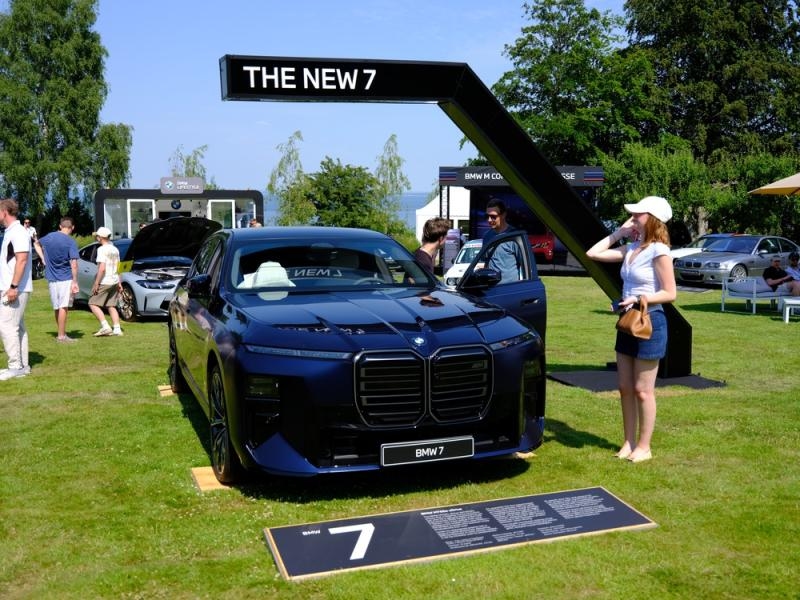
Go for the Panamera if you love driving, enjoy sharp responses, and usually find yourself in the front seat. Go for the 7 Series if you want rear-seat luxury, a hushed ride, and the newest in-car technology.
Whichever way you lean, test drive both on familiar roads, because seat comfort is surprisingly personal and subjective.
| Your Priority | Better Pick |
| Driving fun | Porsche Panamera |
| Rear-seat comfort | BMW 7 Series |
| Easier parking | Porsche Panamera |
| Cabin tech wow factor | BMW 7 Series |
If you’re curious how other Porsche models fit in, read our guide to Porsche Cayman model history, years and generations.
Final Verdict: Porsche Panamera vs BMW 7 Series
Both sedans are wonderfully luxurious, but they chase different goals, and that difference should drive your final decision. The Panamera wins on driving thrills, while the 7 Series wins on rear-seat pampering and relaxed long-distance comfort. Set your budget, rank what matters most, and book back-to-back test drives before you sign anything at all.
Frequently Asked Questions
Is the Porsche Panamera faster than the BMW 7 Series?
Porsche’s dealer site lists the Panamera GTS at 3.6 seconds to 60 mph and 188 mph, versus 4.9 seconds and 155 mph for the 7 Series. Stronger BMW trims narrow that gap, though.
Which car has more rear legroom?
The BMW 7 Series wins here because its body and wheelbase are much longer. The Panamera has snug quad bucket seats, but taller passengers will definitely feel the much tighter space back there.
Does the Porsche Panamera come as a plug-in hybrid?
Yes. Porsche lists the Panamera 4 E-Hybrid, 4S E-Hybrid, and Turbo S E-Hybrid, with quoted electric range of 25 to 30 miles on two of them, so verify current model-year details first.
Is the BMW 7 Series more comfortable than the Porsche Panamera?
For rear passengers, usually yes, thanks to extra space and a lounge-style layout. Drivers might still prefer the Panamera’s supportive seats, so comfort depends on who sits where and how far you travel.
What is the starting price of the Porsche Panamera?
Porsche’s dealer site lists a starting MSRP of $102,800 for the 2025 Panamera, excluding taxes, title, registration, dealer charges, options, and possible tariffs, so real-world prices usually end up running noticeably higher.
Featured Video
The fastest Porsche 911 ever made | Turbo S
The Porsche 911 has a turbo boost button but you only have 20 seconds...
Comment using Facebook