« Articles
Bugatti Chiron vs Porsche 911 in 2026: Which Icon Actually Wins?


Key Takeaways
- The Chiron is chasing a number — top speed, full stop. The 911 is chasing usability.
- Porsche's 2026 range now mixes hybrid and gas-only trims, which only widens the gap between the two cars.
- On efficiency, safety tech, and everyday livability, the 911 isn't even close.
- The Chiron is still a two-seat garage queen built for collectors, not commuters.
- Picking between them really comes down to one question: do you want exclusivity, or do you want a car you'll actually use?
On paper, putting a Bugatti Chiron next to a Porsche 911 feels almost unfair. One is a hand-built hypercar made in tiny numbers for record-chasing; the other is a sports car plenty of people genuinely drive to the office. And yet, somehow, they keep landing on the same shortlists for buyers who take performance seriously in 2026.
Here's how they actually stack up — design, power, handling, safety, and what it costs to live with each one.
What Makes Their Design Philosophies So Different?
Both cars are unmistakably performance machines, but they got there by starting from opposite assumptions about what a fast car should look like.
The Chiron's Aerodynamic-First Body
Nothing about the Chiron's shape is decorative — it's all in service of cutting through air at 260-plus mph. That C-bar sweeping from the roof to the rear fender isn't just a signature look; it's also doing real work as a cooling channel. The wide rear haunches hide the quad turbos, the active rear wing shifts between downforce and top-speed settings on the fly, and a carbon-fiber monocoque keeps things as light as possible given how much engine is packed in behind the driver.
The 911's Timeless Silhouette
The 911 has stayed recognizably itself for six decades now, and that's not an accident — it's the whole brand. The recessed door handles and round LED headlights are still there in 2026, and the roofline flows the same way it always has. Porsche clearly hasn't chased radical reinvention here; the shape still cuts drag efficiently while keeping the kind of visibility a hypercar just doesn't bother with.
Interior Priorities: Cocoon vs Comfort
Feature | Bugatti Chiron | Porsche 911 |
Seating | Strict 2-seater | Up to 4 seats |
Cargo space | Minimal, front trunk only | Usable rear seats + frunk |
Material focus | Hand-finished luxury | Ergonomic, driver-comfort seating |
Daily usability | Low | High |
Step inside the Chiron and you're in a cocoon built for short, intense drives — gorgeous materials, but not much thought given to a four-hour road trip. The 911 goes the other way, pairing genuine luxury with real comfort, and most 2026 trims now throw in lumbar support as standard so longer drives don't wreck your back.
Don’t Miss: What are the Cheapest Porsche Cars You Should Consider to Buy?
How Do Their Engines and Speed Compare in 2026?
This is really where the comparison stops being a fair fight — the two cars are built around completely different ideas of what "fast" means.
Bugatti Chiron: Raw, Unfiltered Power
The Chiron runs an 8.0-liter quad-turbo W16 that puts out 1,479 horsepower — a number that still sounds made up. Zero to 60 takes 2.3 seconds, and top speed lands at 261 mph, keeping it near the very top of the fastest production cars anyone's ever built. There's no pretending otherwise: this engine exists for speed, and nothing else was really part of the brief.
Porsche 911: A Full Performance Spectrum
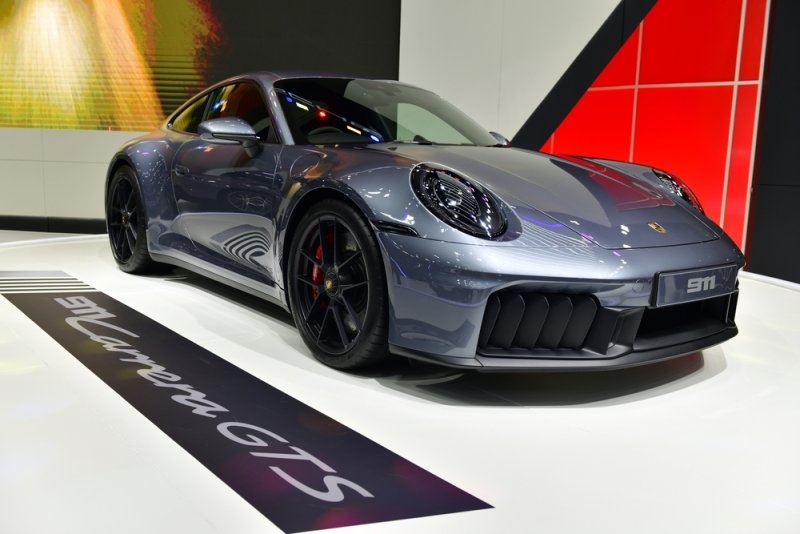
Porsche's 2026 lineup spreads out a lot more, starting at 379 horsepower for the base car and climbing past 640 in the Turbo S and GT trims. The quickest versions hit 60 mph in about 2.6 seconds and top out near 205 mph. New for 2026, some trims now come with hybrid assistance too, which noticeably fattens up the low-end torque.
Why the Gap Doesn't Really Matter for Most Buyers
Realistically, almost nobody is ever hitting 200 mph legally on a public road, so the Chiron's extra headroom is more bragging rights than daily relevance. What actually matters for most buyers is that the 911 lets you pick a power level that fits how you'll really drive it, instead of being stuck with one extreme setting built for a scenario you'll basically never encounter.
Which Car Handles Better on Real Roads?
Going fast in a straight line is one thing — how a car behaves through a corner is where the real character shows up.
Chiron: Stability Engineered for Extreme Velocity
The Chiron's 7-speed dual-clutch gearbox and adaptive suspension aren't tuned for tight, twisty roads — they're tuned to keep the car composed at speeds where most cars would start feeling nervous. That focus comes at a cost, though: it doesn't have the light, tossable feel you'd get from a smaller, lighter sports car built for back roads.
911: Precision Built for Cornering
The 911 sticks with an 8-speed automatic that includes a manual mode, so drivers actually get some say over shift timing. Porsche Active Suspension Management and active sway bars make it sharp through corners, and the GT3 can pull up to 1.17 Gs — numbers that put it right up there with the best-handling sports cars you can buy today.
Braking Performance Head-to-Head
Stop the 911 Turbo S from 70 mph, and it'll do it in about 133 feet, which is genuinely hard to beat at any price. The Chiron's brakes are built around a different problem entirely — shedding the enormous heat generated during a 250-plus mph run — so they're optimized for sustained stability rather than the shortest possible stopping distance.
Which One is Actually Cheaper and Cleaner to Own?
Running costs matter more than ever in 2026, even to people shopping in the supercar and hypercar world.
Fuel Economy Snapshot
Metric | Bugatti Chiron | Porsche 911 |
City mpg | ~9 | 14–18 |
Highway mpg | ~14 | 18–25 |
Emissions rating | Minimal focus | EPA-favored, lower emissions |
Hybrid option | None | Available on select 2026 trims |
The Chiron's numbers aren't a surprise — a W16 chasing 1,479 horsepower was never going to sip fuel. The 911 takes a far more balanced approach, and the new 2026 hybrid trims push that gap even wider between raw performance and what it actually costs to keep filling the tank.
Safety Tech: A Growing Divide
The Chiron keeps things bare-bones on safety tech, which is pretty standard for a hypercar built in small numbers. The 911, meanwhile, now comes loaded for 2026 with adaptive cruise control, lane-keeping assist, night vision, and cross-traffic alerts — the kind of features that genuinely matter on a Tuesday commute, not just on a closed track.
Practicality for Everyday Ownership
Two seats, barely any trunk space — the Chiron was never meant for errands or road trips, and it shows. The 911, on the other hand, seats four, has real cargo room, and has enough everyday flexibility that plenty of owners genuinely use it as their only car, all without giving up an ounce of performance credibility.
Which Car Should You Actually Choose?
If what you want is the fastest production-car experience money can buy, and practicality just isn't part of the equation, the Chiron is still untouchable. But if you want something you can actually drive every day, take to the track on weekends, and still park at the grocery store without a second thought, the 911 is the clear call in 2026.
Also Read: Is the 2027 Porsche 911 GT3 S/C Worth Buying for You?
Frequently Asked Questions
Is the Bugatti Chiron still faster than the Porsche 911 in 2026?
Yes, by a wide margin. The Chiron's 261 mph top speed and 1,479 horsepower blow past even the quickest 911 Turbo S, which tops out around 205 mph. It's still one of the fastest production hypercars ever built.
Can the Porsche 911 be driven daily like a normal car?
Pretty much, yes. Four seats, real cargo space, solid fuel economy, and modern safety tech like adaptive cruise control make it genuinely livable. Commuting, road trips, weekend track days — it handles all of it, unlike the strictly two-seat Chiron.
Why does the Chiron get such poor fuel economy?
Because that quad-turbo W16 was built for horsepower, not sipping gas — expect roughly 9 mpg city and 14 mpg highway. That's normal territory for a hypercar in this class, where raw output always wins over efficiency.
Does the Porsche 911 have hybrid options in 2026?
Yes — select 2026 trims now come with hybrid assistance, adding noticeably more low-end torque while helping efficiency too. It's a smart move that widens the 911's appeal to buyers who want performance without ignoring fuel costs entirely.
Which car offers better safety technology?
It's not close — the 911 wins easily, with adaptive cruise control, lane-keeping assist, night vision, and cross-traffic alerts. The Chiron sticks to the basics, staying true to its hypercar roots, where raw performance takes priority over driver assistance.
This content was created by AI
Featured Video
The fastest Porsche 911 ever made | Turbo S
The Porsche 911 has a turbo boost button but you only have 20 seconds...
Comment using Facebook