« Articles
Porsche Cayenne vs Range Rover Sport 2026 Which Luxury SUV Actually Wins

Key Takeaways
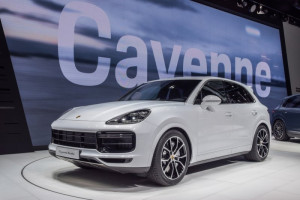
- The 2026 Porsche Cayenne starts around $89,900 and now spans gas, plug-in hybrid, and fully electric powertrains, including a 1,139-horsepower Cayenne Electric variant.
- The 2026 Range Rover Sport starts around $77,600 and adds three new flagship trims, the SV Black, SV Carbon, and SV Bespoke, for buyers chasing exclusivity.
- The Cayenne leads on outright performance and handling precision, while the Range Rover Sport leads on ride comfort, cabin ambience, and off-road pedigree.
- Fuel economy favors neither SUV dramatically, with the Cayenne rated at 17 city and 23 highway mpg and the Range Rover Sport landing between 18 and 22 mpg combined on non-hybrid trims.
- Both SUVs now offer plug-in hybrid options, so buyers chasing lower running costs have real choices in either lineup.
Two of the biggest names in performance luxury SUVs go head to head again this year, and the gap between them has only gotten more interesting. The 2026 Porsche Cayenne now offers a full electric lineup alongside its gas and hybrid trims, while the Range Rover Sport has added three new range-topping SV variants for buyers who want exclusivity above almost everything else. So which one deserves your money in 2026?
What Powers Each SUV in 2026?
Porsche has widened the Cayenne range considerably this year. The lineup now runs from the standard 3.0-liter turbo V6 all the way to a fully electric Cayenne producing a staggering 1,139 horsepower, officially the most powerful production Porsche ever built.
The Range Rover Sport counters with a six-engine spread of its own, and Land Rover's naming convention makes it easy to gauge power just by the number.
Model | Entry Engine | Top Engine | Entry Price |
Porsche Cayenne | 3.0L Turbo V6, 348 hp | Electric dual motor, 1,139 hp | $89,900 |
Range Rover Sport | 3.0L Twincharger mild hybrid, 355 hp | 4.4L Twin Turbo V8, up to 635 hp (SV) | $77,600 |
The Cayenne S brings a 4.0-liter twin-turbo V8 with 468 horsepower, while the Cayenne GTS pushes that same engine to 493 horsepower. On the Range Rover Sport side, the P530 and P635 SV both use a 4.4-liter turbocharged V8, with the SV variant tuned for genuine supercar-level straight-line pace.
Which One Actually Handles Better?
Is the Cayenne still the driver's choice in 2026? Largely, yes. Porsche's chassis tuning, rear axle steering, and Porsche Active Suspension Management combine to make the Cayenne feel noticeably smaller and sharper than its size suggests. It remains the closest thing to a sports car experience in this segment.
The Range Rover Sport takes a different approach entirely. Its Dynamic Response Pro system uses hydraulic roll control to keep the cabin flat through corners without sacrificing the plush ride Land Rover buyers expect. It will not out-corner a Cayenne, but few buyers cross-shopping this segment are chasing lap times anyway.
- Cayenne strengths: sharper steering feedback, faster 0 to 60 times across most trims, more track-focused Sport Chrono tuning
- Range Rover Sport strengths: superior ride comfort on rough pavement, stronger low-speed off-road manners, more relaxed high-speed cruising
Don't Miss: What are the Cheapest Porsche Cars You Should Consider to Buy?
Inside the Cabin: Whose Tech and Comfort Wins You Over
Both cabins have been refreshed for the 2026 model year, and the differences say a lot about each brand's priorities.
Feature | Porsche Cayenne | Range Rover Sport |
Infotainment | 12.3-inch PCM with new Amazon Alexa integration | Dual-screen Pivi Pro setup with digital gauge cluster |
Premium Audio | Available Bose or Burmester with Dolby Atmos | Available Meridian surround sound |
Standard Driver Aids | Adaptive cruise, lane keep, night vision available | Adaptive cruise, surround camera, terrain response |
Interior Feel | Sporty, driver-focused, tech-forward | Lounge-like, rugged luxury, wood and leather heavy |
Porsche's biggest 2026 upgrade is software, not hardware. The revised infotainment stack is noticeably quicker to respond, and the new Porsche App Center lets owners run third-party apps directly through the dash.
Land Rover, meanwhile, leans into materials and atmosphere. The Range Rover Sport still feels like the more special place to sit for buyers who prioritize ambience over gadgetry.
Pricing and Value in 2026
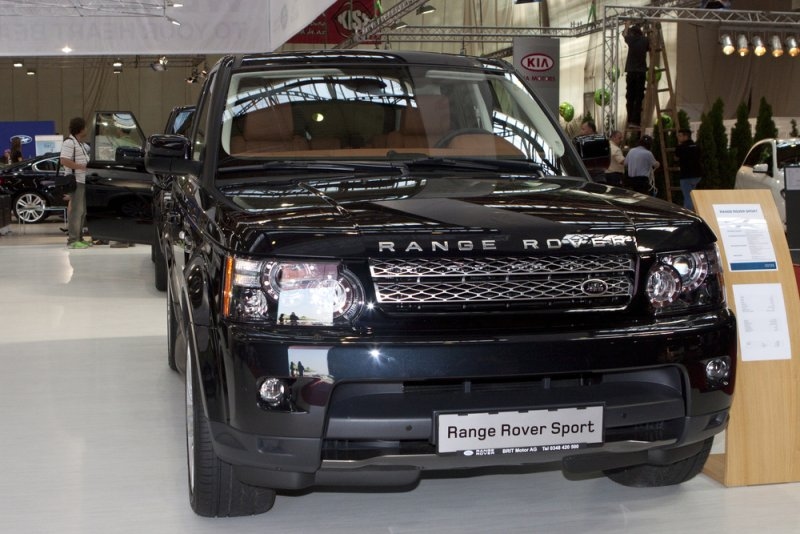
Do you get more for your money with the Cayenne or the Range Rover Sport? On paper, the Range Rover Sport undercuts the Cayenne at the entry level by roughly $12,000. That gap narrows significantly once you compare similarly equipped mid-range trims, where both SUVs tend to land in the low $100,000s once options are added.
- Porsche Cayenne range: $89,900 to $164,500 before options
- Range Rover Sport range: $77,600 to $161,600 before options
- Real-world optioned pricing for both brands frequently pushes past $110,000 on popular mid-tier trims
Porsche has also confirmed lineup-wide price increases coming in January, following a difficult 2025 financial year for the brand, so early 2026 buyers may find slightly better deals than those shopping later in the model year.
Off the Beaten Path: Which SUV Handles Rough Terrain Best
If you actually plan to leave pavement, the Range Rover Sport still holds the edge. Its Terrain Response system, height-adjustable air suspension, and available low-range gearing give it a genuine advantage in mud, sand, or snow. The Cayenne is capable for a performance SUV, but it was never designed to be the primary choice for serious off-roading.
Fuel economy is close enough that it should not be a deciding factor for most buyers. The Cayenne's standard V6 returns 17 mpg city and 23 mpg highway, while the Range Rover Sport's non-hybrid trims land between 18 and 22 mpg combined. Buyers who want to minimize running costs entirely should look at the Cayenne Electric or the Range Rover Sport's plug-in hybrid P460e and P550e trims instead.
Final Verdict
Choose the 2026 Porsche Cayenne if performance, handling precision, and cutting-edge tech genuinely matter more to you than off-road capability. Choose the Range Rover Sport if ride comfort, cabin ambience, and true all-terrain confidence top your list. Both remain outstanding luxury SUVs in 2026, and the right pick really does come down to how and where you drive.
Also Read: Is the 2027 Porsche 911 GT3 S/C Worth Buying for You?
Frequently Asked Questions
Is the 2026 Porsche Cayenne faster than the Range Rover Sport?
Yes, in most comparable trims, the Cayenne posts quicker 0 to 60 times thanks to its sportier tuning and lighter feel. The Cayenne Electric's 1,139 horsepower output puts it in a different performance class entirely compared to any current Range Rover Sport trim.
Which SUV is better for off-roading in 2026?
The Range Rover Sport wins here. Its Terrain Response system, adjustable air suspension, and available low-range gearing give it stronger real-world capability on mud, sand, rocks, and snow than the road-focused Cayenne.
Does the Range Rover Sport come in a fully electric version?
Not yet. The 2026 lineup includes mild hybrid and plug-in hybrid trims like the P460e and P550e, but a fully electric Range Rover Sport has not launched, unlike Porsche's new Cayenne Electric variant.
Which SUV has better interior technology in 2026?
Porsche edges ahead with its updated PCM infotainment, Amazon Alexa integration, and new Porsche App Center. The Range Rover Sport counters with a striking dual-screen Pivi Pro layout and a more atmospheric cabin overall.
Is the Range Rover Sport cheaper than the Porsche Cayenne?
At entry level, yes, starting around $77,600 versus $89,900 for the Cayenne. Once you climb into comparably equipped mid-range trims, pricing between the two brands narrows considerably and often lands close together.
This content was created by AI
Featured Video
The fastest Porsche 911 ever made | Turbo S
The Porsche 911 has a turbo boost button but you only have 20 seconds...
Comment using Facebook